 You are browsing our UK website.
Visit our USA site
You are browsing our UK website.
Visit our USA site
You are browsing our UK website.
Visit our USA site
You are browsing our UK website.
Visit our USA site


In October, I was hugely excited to have the opportunity to return to Tanzania, a country I had first travelled to about eight years previously. On that first occasion, I had followed the renowned Northern Circuit, which includes the popular national parks such as the Serengeti, Ngorongoro Crater, Tarangire and Lake Manyara. The circuit is celebrated for its high concentration of wildlife as well as its wonderfully diverse landscapes.
On my first visit to Tanzania I completed the circuit entirely overland, travelling by road between the various parks. It was a fantastic trip and provided a great insight to the magnificent landscapes of this remarkable country. Accommodation was basic but functional, but always in great locations. This trip was to be very different, however – a considerably more high-end experience, as I embarked on a fly-safari operated by A&K Sanctuary on their Classic Tanzania Itinerary.
After a smooth flight out from London Gatwick with Qatar Airways via Doha, I landed in Kilimanjaro, where I was efficiently met by the A&K staff for a transfer over to Arusha airport. There, I was introduced to my three fellow travel companions to board a light aircraft flight to Kuro Airstrip, the gateway for exploring Tarangire National Park. On arrival, we were greeted by our ranger with a lovely display of drinks and snacks laid out at our safari Jeep before immediately embarking on our first game drive through the park.
It wasn’t too long before we had the fortune to see a pair of cheetah brothers resting under a tree, alongside zebras and wildebeest. Lunch was taken at a fabulous location overlooking the Silale Swamp, along which we saw many elephants gathering along the water’s edge, as well as a pair of sleeping lions lying under a tree. It was a beautiful part of the park, greener and more vibrant compared to my previous visit, which I remember as being much drier with more of the iconic baobab trees the park is known for.

Arriving by light aircraft
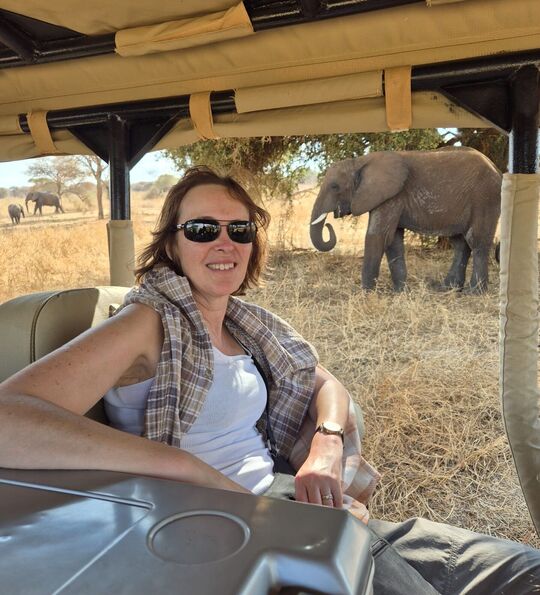
Spotting elephants in Tarangire National Park
We drove on through the park, arriving at our accommodation for the night at the Swala Camp, an A&K Sanctuary property. It’s a tranquil and intimate camp where you can truly connect with nature. Immediately on arrival, we were greeted with sundowners, and we were struck by the sight of huge numbers of elephants arriving at the waterhole which is overlooked by a huge wooden deck and boma area. I have only ever previously seen such numbers at Chitwa Chitwa in South Africa. I was then escorted to my spacious safari tent with a huge king bed and deck overlooking the savannah from where I sat watching the elephants making their way to and from the waterhole, passing in front of my room. A fine gourmet dinner was served overlooking the sights and sounds of the waterhole, and during dinner a spotlight revealed not only elephants but lions and buffalo coming down to drink. We even spotted a leopard drinking from the camp swimming pool during the evening!
We really felt ourselves to be in a remote and beautiful part of Africa. Strangely, the park and camp were very quiet. It was moving towards low season in other parts of the country as the rainy season was approaching, but apparently October is the very best time in Tarangire. The game viewing was so good in this area I could have stayed all week right there without even needing to leave camp to witness a huge amount of wildlife. However, we only had one night before we had to reluctantly drag ourselves away. Over breakfast, again with huge numbers of elephants at the waterhole, we all struggled to concentrate on our food before preparing for our departure.
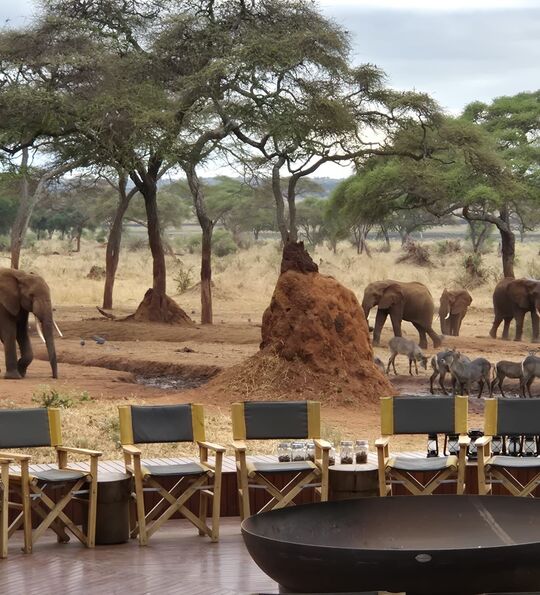
The view from camp
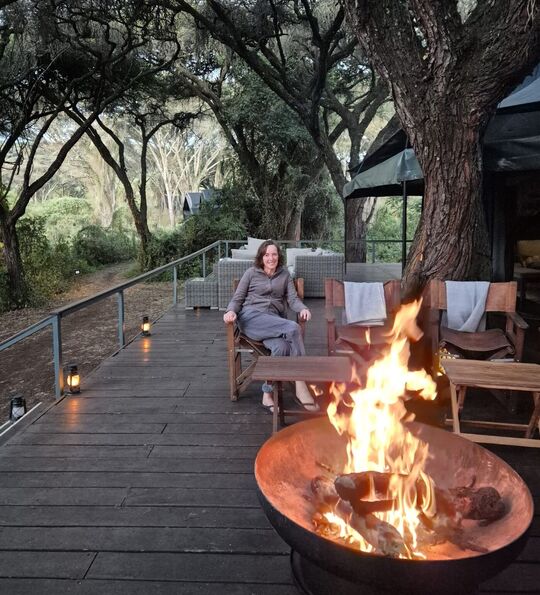
Relaxing at camp
Reluctantly bidding farewell to Tarangire, we made our way slowly through the park to the main entrance gate, stopping briefly en route for a close encounter with a group of elephants – one of whom got a little bit too close for comfort, but provided us with a thrilling encounter. At the park gates we switched vehicles for our journey by road to Ngorongoro Crater, stopping along the way at Lake Manyara. The drive through the park was pleasant enough and provided a lovely spot for a picnic lunch overlooking the lake, the seventh-largest in the country. But things had changed here since my last visit. Lake Manyara bills itself as the home of the famed tree-climbing lions; however, the chance of seeing them in the dense bushes where off-road driving isn’t permitted would be extremely slim, and they can actually be found in other parks such the Serengeti.
The main issue, however, was with the lake itself. Previously, Lake Manyara was a shallow, alkaline lake, where I had once seen many flamingos and pelicans along with plentiful wildlife grazing on the shores. Now, due to climate change and increased rainfall in the area, the water levels on the lake have risen to the extent that the water is no longer the alkaline environment suitable for the flamingos, and the flat areas near the lake are now largely flooded so the whole wildlife experience has been sadly diminished.
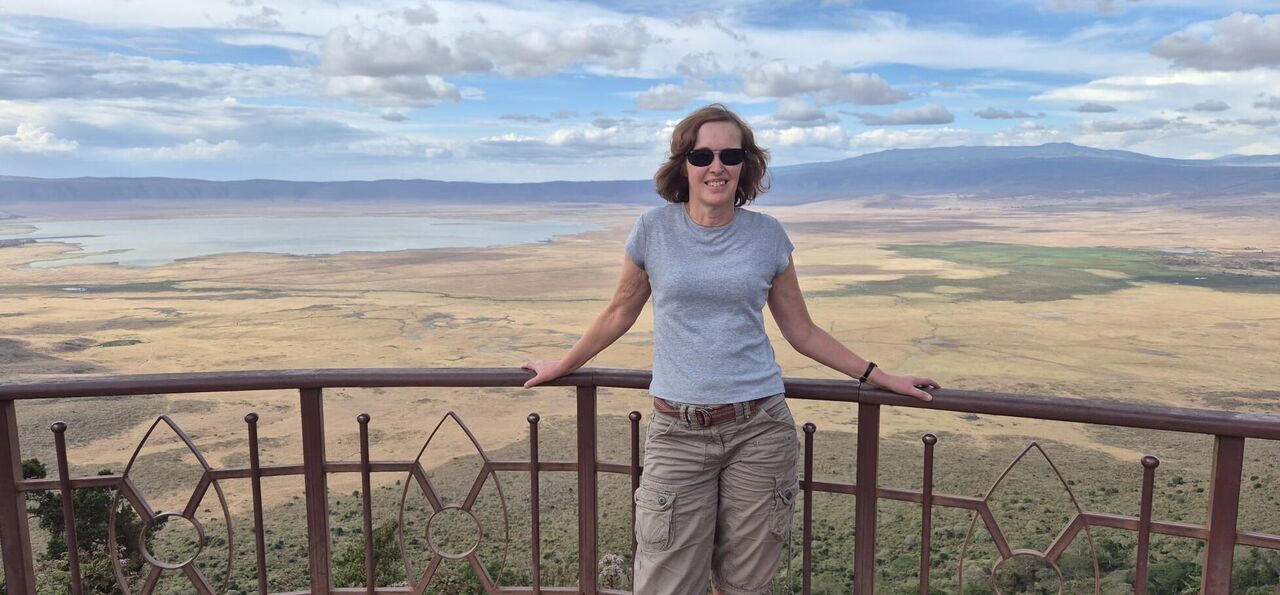
Overlooking Ngorongoro Crater
We continued on our way towards the Ngorongoro Crater Conservation Area where we were greeted by a few baboons. Driving on through stunning scenery and ‘Towering Trees’ (primarily fever trees and fig trees which grow in the Lerai Forest), we arrive at the crater view point. I stood on the same spot as I had done before and here nothing had changed. The first view of the huge crater below is revealed from high above. The crater is roughly 20 kilometres wide and over 600 metres deep. It is the largest unbroken and unflooded caldera in the world. The whole area is on the UNESCO World Heritage list and the crater itself is often billed as the ‘World's Largest Zoo’ due to its dense concentration of wildlife, including a high population of lions and all of the Big Five.
We then proceeded on along the crater rim to our lodge, the stunning A&K Sanctuary Ngorongoro Crater Camp, nestled in the forest on the rim of the extinct crater. The camp comprises just 10 uncomplicated guest tents and provides quick and easy access to the caldera. Whilst the camp doesn’t have views of the crater itself, it is in a truly beautiful forested setting in the shade of acacia trees, and each morning you are woken to an enchanting dawn chorus from the many resident birds. The central area comprises a dining area and cosy bar as well as a fire pit from which we enjoyed our evening sundowners. The tents themselves spread out into the forest are lovely and cosy, with heated blankets which were needed for the cooler night time temperatures.
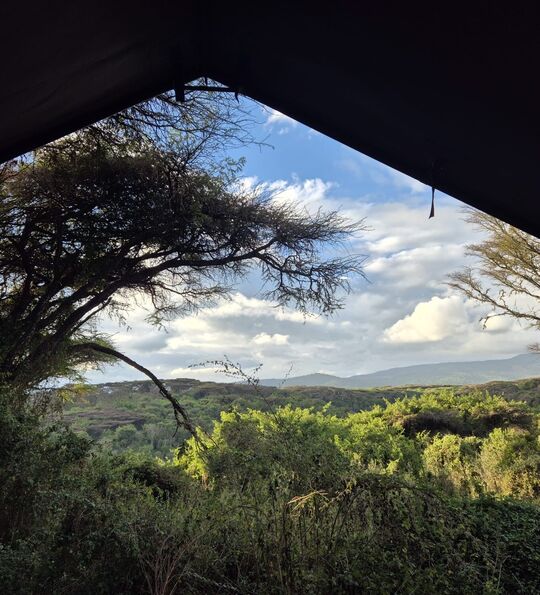
View from camp at Ngorongoro Crater
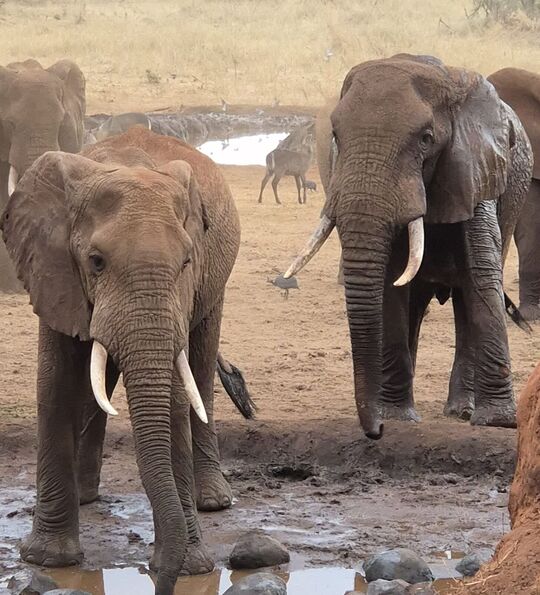
The residents of Ngorongoro Crater
The next day, we set out early to enjoy a full day in the Ngorongoro Crater. Descending to the crater floor on a misty morning with the towering crater walls all around us, we travelled through the forest, glimpsing first a zebra under the trees. Then, once down on the crater floor, a large herd of buffalo began walking towards us. Once onto the plains on the floor of the crater, we viewed huge numbers of wildebeest and zebra grazing as we traversed through the many diverse eco-systems within the crater, including a stop at a hippo pool to view its noisy residents. We slowly made our way around the crater floor, stopping to view some of the many elephants and the occasional hyena before arriving at a popular lunch time picnic spot overlooking a small lake.
On leaving the lunch spot, we were treated to the sight of a couple of male lions who were relaxing not far from the roadside. It is important to remember that you are not permitted to go off road within the park, and all drives must be in closed vehicles. We did spot a couple of the rare rhinos who reside within the crater but as is quite typical in the area, these were spotted further afield and could only really be seen clearly using binoculars.All in all, it was a fantastic day, and back at the camp we enjoyed relaxing in the tranquil forest setting where we were served a lovely dinner.
Leaving the crater, we made our way on a rather damp morning to Lake Manyara Airport to catch our light aircraft flight up to the Lamai Airstrip, located in the northern part of Serengeti National Park. As we came in to land we were treated to stunning views of the golden savannah below and on landing once again a wonderful welcome awaited us with drinks at our safari Jeep. With our ranger we then set out to explore the huge park which stretched all around us, stopping to view elephants, giraffes, zebra, topi (a type of antelope found in the savannah), as well as the huge herds of wildebeest ready to make the crossing over the Mara river as part of their annual migration.
The weather, however, was beginning to look rather foreboding, so we made our way to camp before a full on storm began with torrential rain, thunder and lightning. It was a dramatic sight to experience over the vast plains which stretched out below from the warmth and comfort of our camp, the charming A&K Sanctuary Kichakani Camp, featuring just seven luxury safari tents. Unfortunately, drinks around the camp fire weren’t possible due to the weather, but a fine meal was experienced before we retired to our tents and once more enjoyed the heated blankets our butlers had thoughtfully prepared for us. In the morning, we were treated to ‘bucket showers’, again prepared by our butlers who delivered coffee and biscuits to our rooms to enjoy whilst treated to a lovely, warm sunrise over the vast plains below.
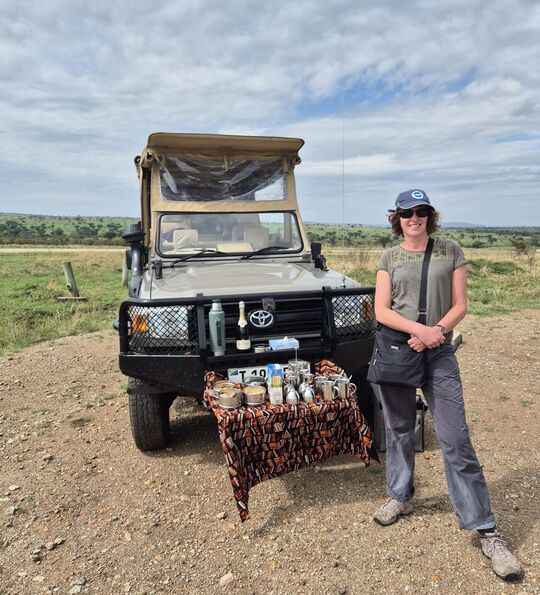
Arriving in Serengeti National Park
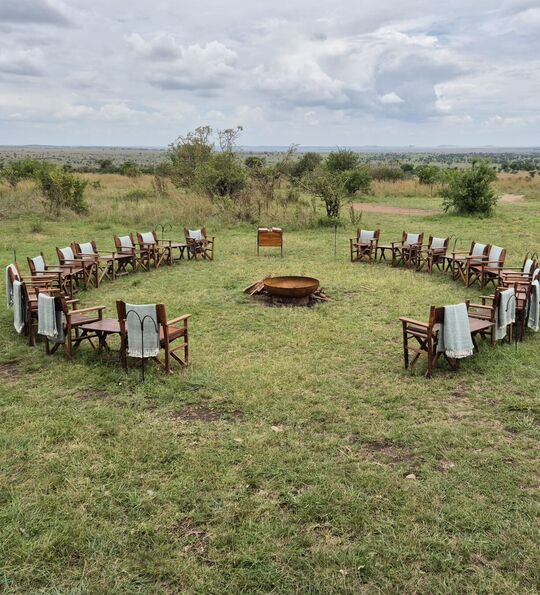
View from camp in the Serengeti
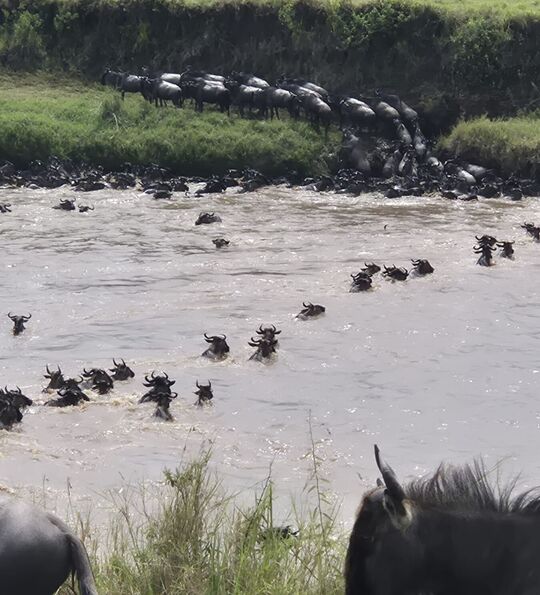
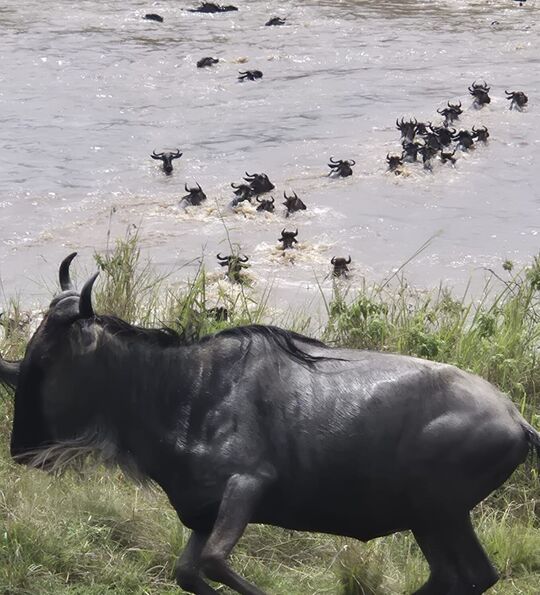
Fortunately, the storm had passed and warmth and sunshine had once again returned to the Serengeti. This UNESCO site is a vast eco-system renowned for its annual Great Migration of wildebeest and zebra as well as an abundance of other wildlife. Kichakani Camp is a luxury mobile camp redolent of the Golden Age of Safari. The camp moves between two locations so as to be in the perfect spot for witnessing the Mara River crossing and also the wildebeest calving season. We were there just in time to witness the last few weeks of the crossing of the nearby Mara River. The crossing is a dramatic event which typically takes place between July and October, when hundreds of thousands of wildebeest and zebras swim across the river to reach new pastures, hoping to avoid the perils of both the waiting crocodiles and the strong currents. As it was nearing the end of the period for crossing, I wasn’t particularly expecting to witness a great deal; however, it soon became apparent that there were still large numbers of wildebeest amassing on our side of the river, all still facing the daunting challenge of getting across to the far bank. However, rather than waiting camped out by the river, we explored the park and enjoyed tracking a group of 11 hyenas who we first heard making their haunting “whoop” sound.
By 10am, it was time for our morning coffee in the bush and it was just at this moment that our ranger suddenly said “jump!” in the vehicle and raced us down to the river, as a crossing had commenced. It becomes apparent that something big is about to happen as the noise of the wildebeest suddenly rises to a crescendo and their grunts and moans intensify as they start running around, not wanting to be the one left behind when the action starts. Parking up on the bank with the river stretched out below, we were treated to a perfect view of the action of the at once most dramatic and chaotic event I have ever had the privilege to witness. As the drama unfolded on a tumultuous scene, hundreds of wildebeest began to launch themselves into the rapidly flowing waters below. The waters were in full surge due to the heavy rainfall the night before and it soon became apparent that many of the unfortunate animals were being dragged down the river to either drown or become prey to the hungry crocodiles waiting downstream.
The Great Migration
The Great Migration
It was a harrowing scene and one where emotions ran high. I found myself becoming invested in the plight of individuals who I witnessed battling against the currents and in danger of being swept away. When one such creature managed to escape from the water on the far bank and gradually made his way back along the river to successfully rejoin the herd, I found myself moved almost to tears. Many animals had great difficulty battling their way up the steep bank but more joy was experienced when waiting mothers reunited with their calves on the top of the bank and seemingly skipped off happily to rejoin their friends on the fresh pastures beyond. The drama unfolded before our eyes for almost 30 dramatic minutes with some individuals even giving up halfway and reemerging back on our side of the river. They had failed in their objective but had at least survived to try again another day!
After all the excitement of the morning, we retired to a quieter area of the park for a relaxed picnic lunch under a tree before returning back towards the river to see what scenes were now unfolding. There were plenty more wildebeest beginning to amass on our side of the river and we spent the afternoon watching them approach the river, spending hours assessing the conditions, nervously scanning the water for crocodiles and other hazards. Eventually, just as dusk was approaching and the wildebeest must have sensed it was the last chance of the day, the action started up again with the leaders launching themselves from quite a steep riverbank into the waters below charged in columns across the water. On the whole this seemed to be a more successful crossing, perhaps because the water levels had rescinded slightly meaning they were less prone to being swept away.
As the action at the riverbank began to cease for the day we suddenly heard word of a leopard having been spotted up a tree not far from camp. We made it back just in time to see the big cat descend from high up in the branches of a huge tree – the perfect end to an exhilarating day of safari action. Back at camp, we were able to sit out around the campfire and drink a glass or two of bubbly to toast our successful day in the bush.
The next morning it was time to part company with my travel companions and head back towards Arusha, which involved a light aircraft flight to the Seronera Airstrip. There, I observed long columns of wildebeest continuing on their journey south before catching a slightly larger plane back to the city. Here I was met and transferred for my final night at the Lake Duluti Lodge, a luxury retreat within a 30-acre coffee farm. It has a nice location in the forest blending luxury with nature with its 19 spacious chalets. I spent an enjoyable afternoon by the pool watching the monkeys play in the surrounding trees before a pleasant dinner on the restaurant deck.The next morning I was up at the crack of dawn for my transfer back to Kilimanjaro for my long flight home via Dar Es Salaam and Doha.
In summary the trip was a fantastic experience, most notably for having achieved the ultimate Africa bucket list experience of witnessing one of the greatest spectacles in nature: the drama of the crossing of the Mara River. The fly safari had saved travelling time and enabled us to spend more time in the game-rich areas. By arriving early we were able to be straight out on safari and we were also able to do our drives from safari Jeeps (with the exception of at the crater) as opposed to the road vehicles, which gave us a much better safari experience. Additionally, the camps on this trip were the most intimate and luxurious of properties and always in the best locations to easily access the prime wildlife viewing areas. So, I would definitely recommend this option to anyone with the budget who isn’t put off by the idea of flying on light aircraft.